

7 Things Small-Dog Owners Should Know About Tracheal Collapse Before the Next Bad Episode

You probably just read something that made you look at your dog's medication differently. Whatever brought you here, this is the full explanation behind it.
If your small dog has tracheal collapse, you have probably heard the usual advice. Use a harness. Keep their weight down. Avoid excitement. Manage the coughing.
But there is one distinction most owners are never told to make.
Managing the symptoms is not the same as supporting the structure of the airway itself.
Here are 7 things worth understanding.
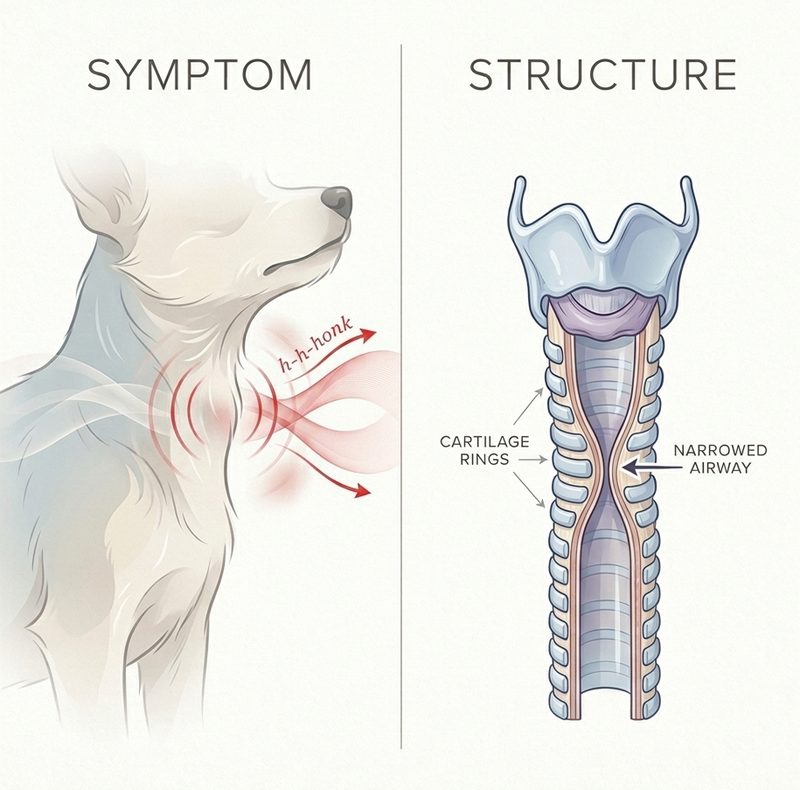
1. The honking is the symptom. The cartilage is the structure.
The sound is what you hear. But underneath it, the trachea is supported by C-shaped cartilage rings whose job is to hold the airway open during every breath.
When those rings lose rigidity, the airway narrows. That structural change can continue quietly between episodes whether the coughing sounds better or not.
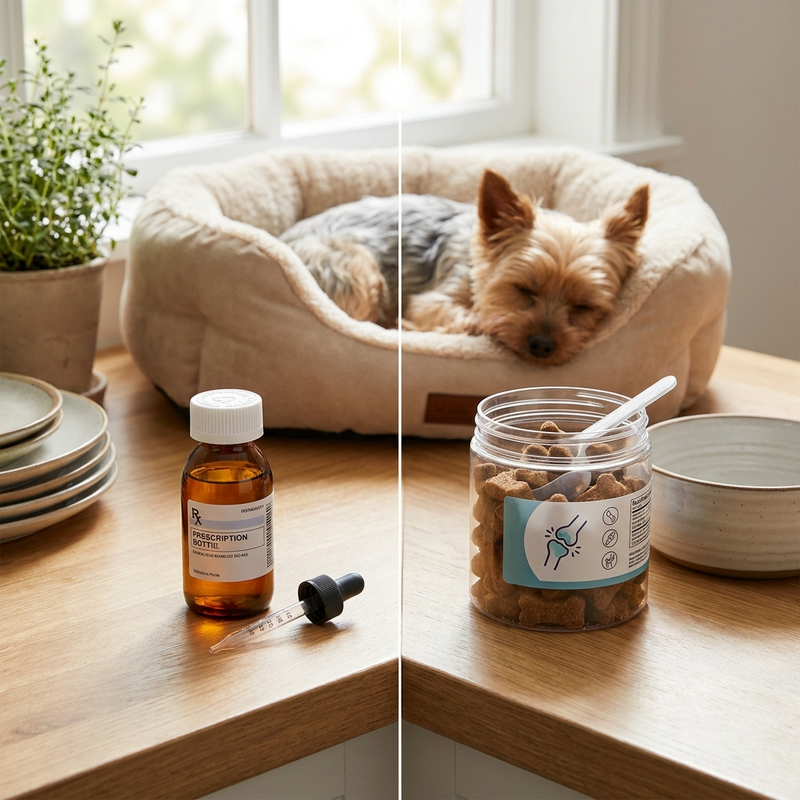
2. Cough control and structural support are two different jobs.
Cough suppressants reduce the cough reflex. That matters. But reducing the cough does not mean the cartilage underneath is being nutritionally supported.
Those are separate goals doing separate jobs.
It is possible to be completely consistent with symptom management and never once address what the cartilage rings themselves need between appointments.
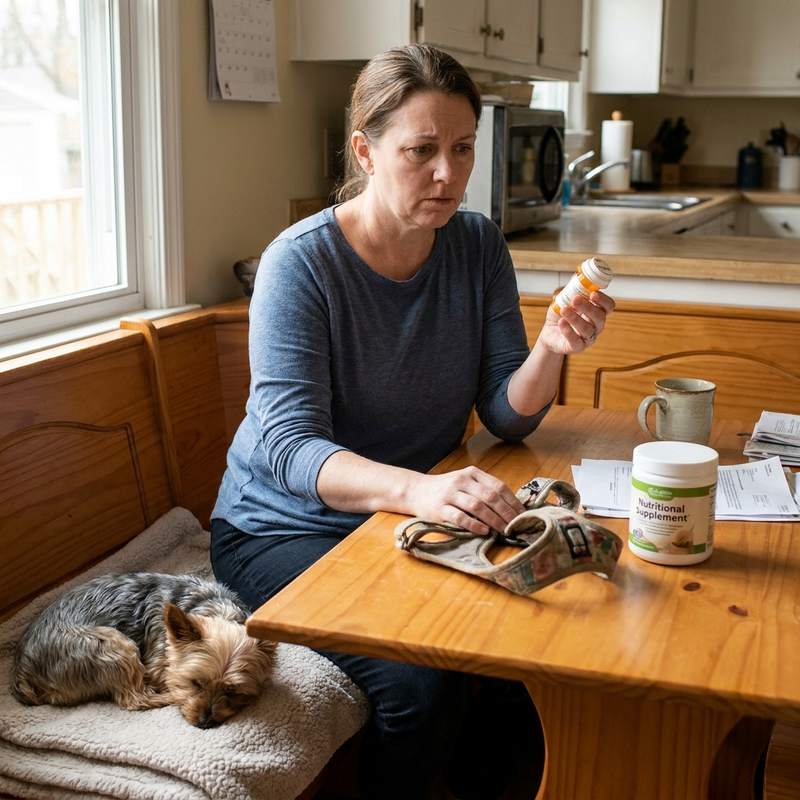
3. Trigger management can reduce pressure, but it cannot rebuild the tissue.
Harness. Weight. Excitement avoidance. Shorter walks. Calmer greetings.
All of that can help reduce external pressure on a compromised airway.
But triggers are not the same as the structural weakness that makes the airway vulnerable in the first place. Managing the trigger does not provide the nutritional building materials the cartilage depends on to hold its shape.
That is a different layer of support entirely.
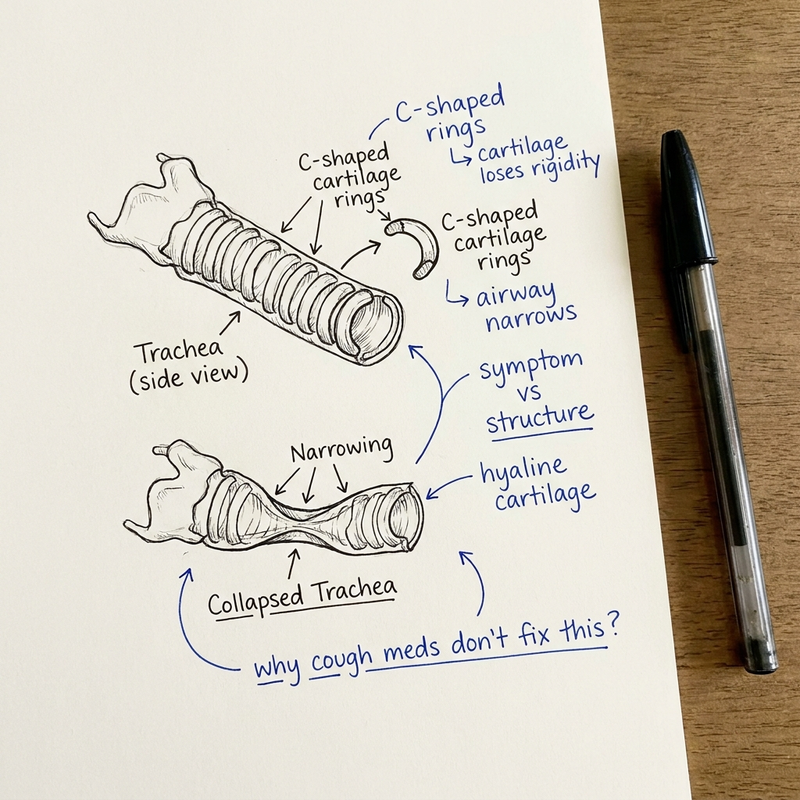
4. Tracheal cartilage has specific nutritional requirements most products never address.
Tracheal rings are made of hyaline cartilage, which is non-weight-bearing tissue with completely different nutritional requirements from hip or knee cartilage.
To maintain rigidity those rings need vitamin C for collagen synthesis, MSM for connective tissue integrity, hyaluronic acid, marine-derived omega-3 fatty acids specifically EPA and DHA, and glucosamine and chondroitin as raw materials for cartilage maintenance.
When these are consistently absent, the collagen matrix softens. The rings flatten. The airway narrows. Quietly. Underneath the managed symptom.
5. Most airway products were built for joints and relabeled.
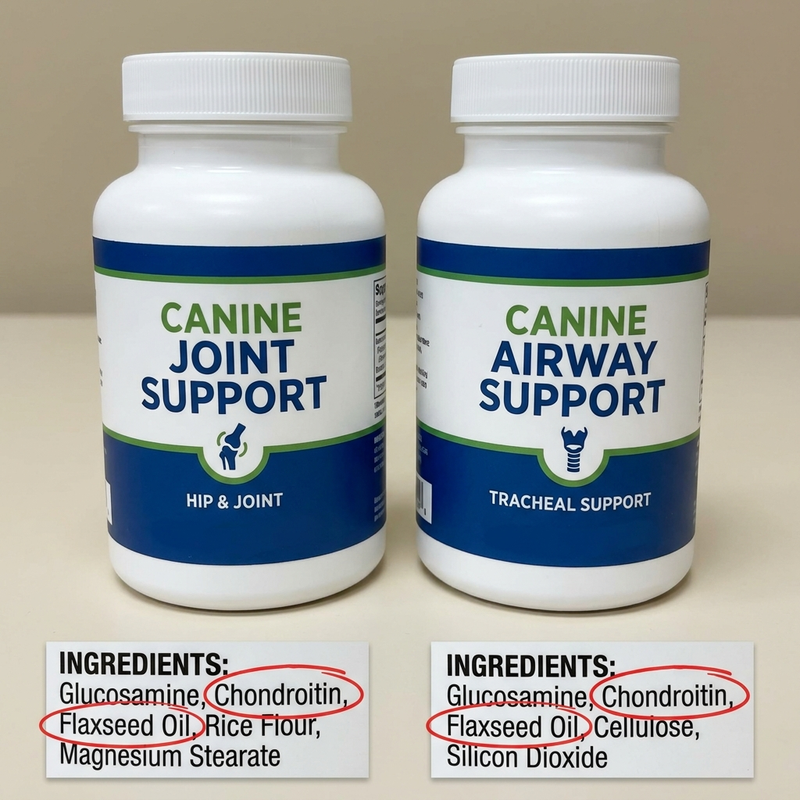
The majority of supplements marketed for tracheal support are joint formulas in different packaging.
The glucosamine targets joint surfaces. The omega-3 is plant-based flaxseed that dogs cannot efficiently convert. The chondroitin is bonded to fillers that block its own absorption.
Because there is no FDA framework for animal supplements, nothing stops a manufacturer from putting tracheal on the front of a bottle that contains a generic joint formula inside.
The only way to know the difference is to read the actual formulation and ask whether it makes sense for non-weight-bearing airway cartilage in a small breed dog.
6. What to look for in a formula actually built for small-breed airway cartilage.
Ignore the front label. Turn the bottle around.
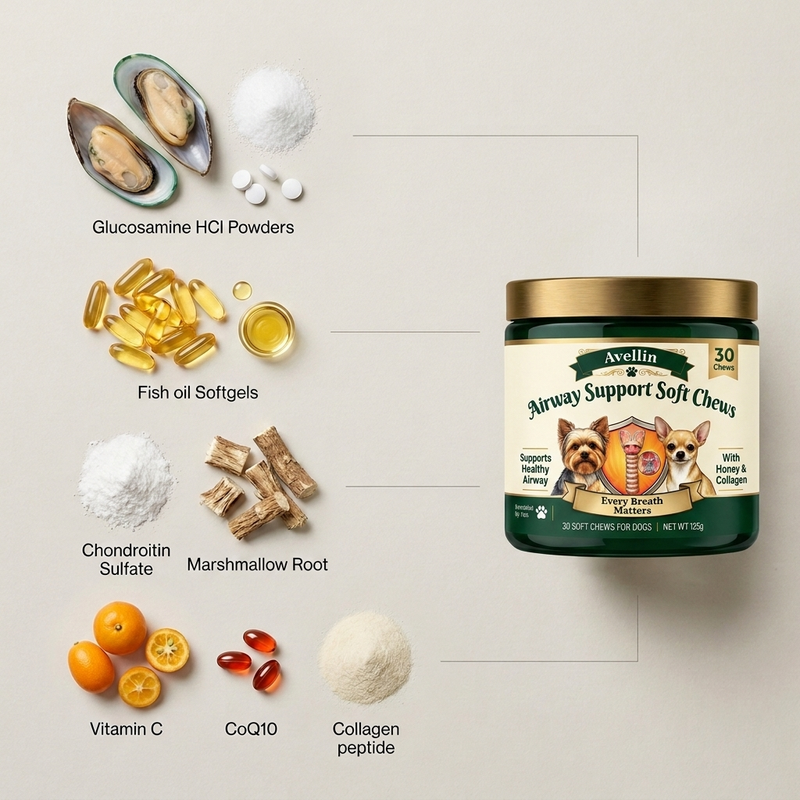
Look for glucosamine at a therapeutic dose in a bioavailable form. Chondroitin bonded for cartilage uptake, not filler. Marine-derived omega-3, not flaxseed. Vitamin C in a form that drives collagen synthesis. MSM for connective tissue integrity. And a formulation designed specifically for small dogs.
AirWay by Avellin was built around exactly those criteria. Pharmaceutical grade ingredients. Marine-derived omega-3 at 93 percent bioavailability. Every ingredient targeted at small-breed airway cartilage specifically. Not a joint supplement in different packaging.
7. The changes owners notice are often surprisingly ordinary.
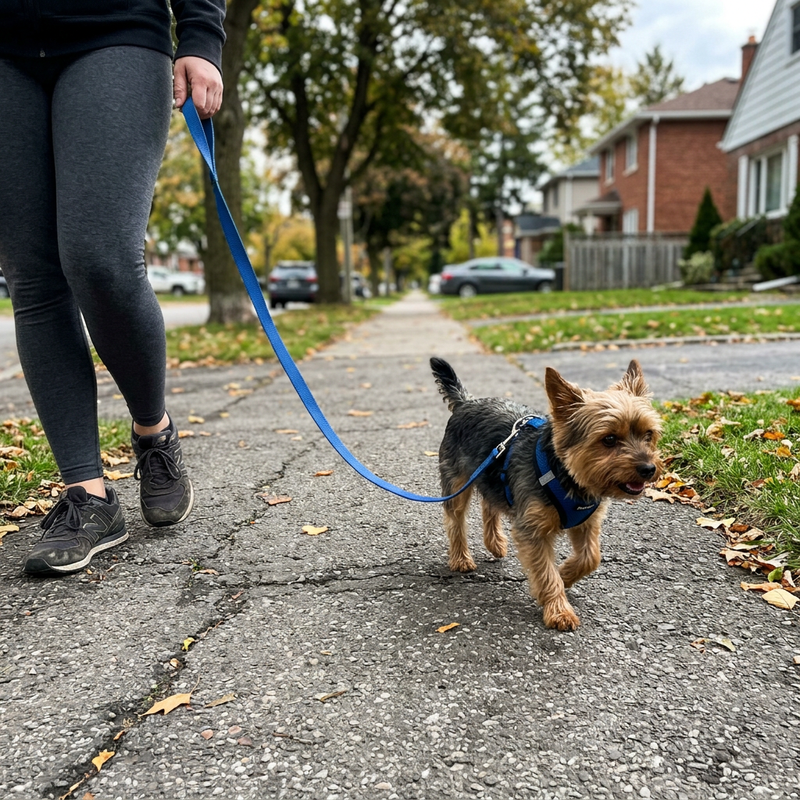
A quieter morning. Drinking water without triggering an episode. Getting through a visit without bracing for the honk. Sleeping through the night. A walk that does not get cut short.
Those small moments matter because they are the parts of daily life tracheal collapse slowly takes over.
The goal is not a cure. It is more comfortable days, fewer frightening interruptions, and a routine that feels less like constant monitoring.
One soft chew every morning. That is the complete protocol.
The question most owners are never told to ask
If you are already doing the medication, the harness, the weight management, and the trigger avoidance, the question is not whether to stop doing those things.
The question is whether there is a nutritional layer underneath all of it that nobody has mentioned yet.
What is supporting the cartilage between every single appointment?
That is the question Avellin AirWay was built to answer.

Help Your Small Dog Breathe Easier
AirWay delivers the specific nutritional support that tracheal cartilage needs to hold its shape, the layer the standard management protocol was never designed to provide. One soft chew every morning. Built specifically for small breeds under 15 pounds.
CHECK AVAILABILITY90 days to evaluate. Full refund if it does not make a difference.